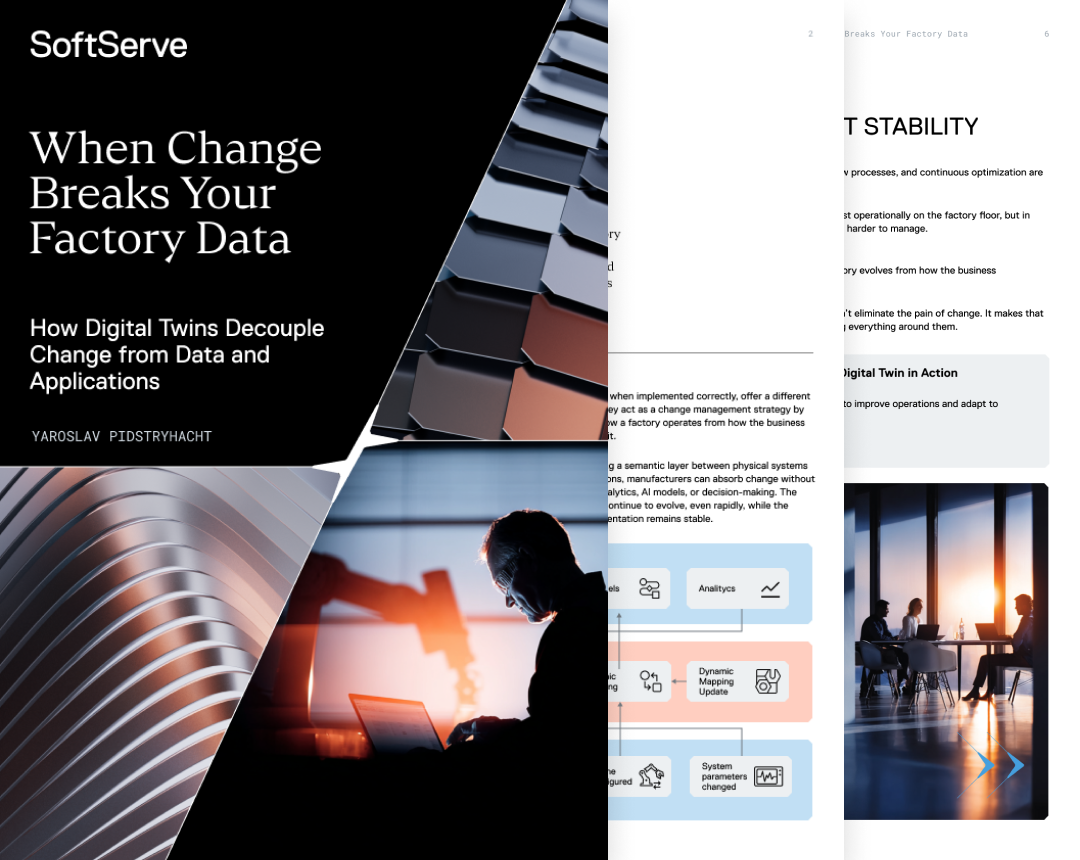
This paper explores how digital twins act as a semantic bridge between physical factory systems and the business applications that depend on their data. Instead of tying applications directly to raw factory data, digital twins create a stable representation of factory operations. When machines are updated, sensors change, or tags are renamed, the underlying data can shift without breaking the systems that rely on it.