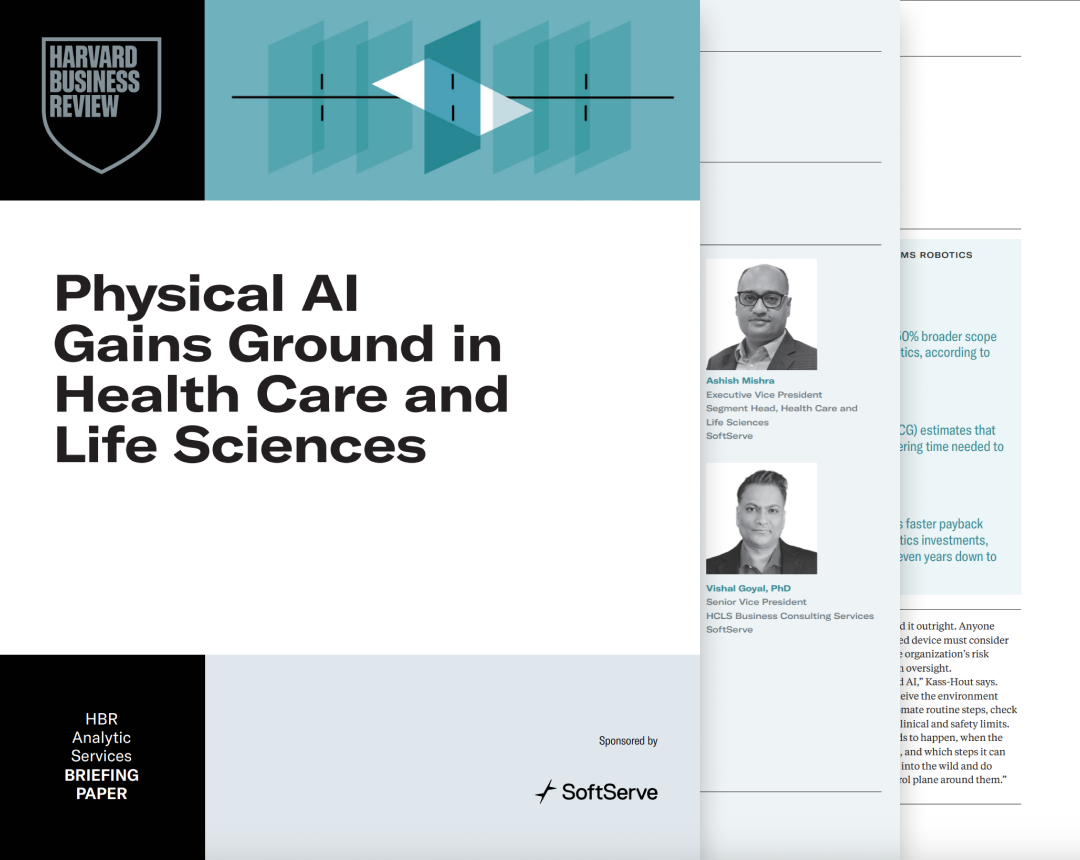
Boston Consulting Group estimates that payback on innovative robotics investments has dropped from five to seven years to one to three. McKinsey & Company projects that the physical AI ecosystem could unlock $1 trillion or more in economic value by 2035.
The U.S. Food and Drug Administration (FDA) cleared 295 AI-enabled medical devices in 2025, and it says its evaluation methods are "not designed to predict behavior in dynamic, real-world environments." That leaves much of the burden of proof with the organizations deploying the technology.
This paper gives you the evidence to carry it:
The value bar one expert sets for clinical and biotech workflows: potentially two or three times better, well beyond a one or two percent gain
How GE HealthCare builds escalation to a human into its systems
The FDA study that simulated 2,986 patients and matched the results of a human clinical trial
What a proof of concept should leave behind, from data infrastructure to validated software components
Complete the form to get the full paper and bring the evidence into your next investment discussion.
Manufacturers are under pressure to increase output, accelerate launches, and improve sustainability all at once. Yet traditional commissioning and physical testing remain costly, slow, and disruptive.
Simulation, virtual commissioning, and digital twins offer a better way.
In this whitepaper, you’ll see how manufacturers use high-fidelity simulation and real-time digital replicas to design, test, and refine production systems before changes reach the shop floor.
Discover how a connected digital thread across engineering, automation, and operations enables faster launches, higher OEE, and more resilient factories.